Why Syracuse Community Health
Care You Can Trust, Close to Home
Accredited, experienced, and committed to meeting you where you are.
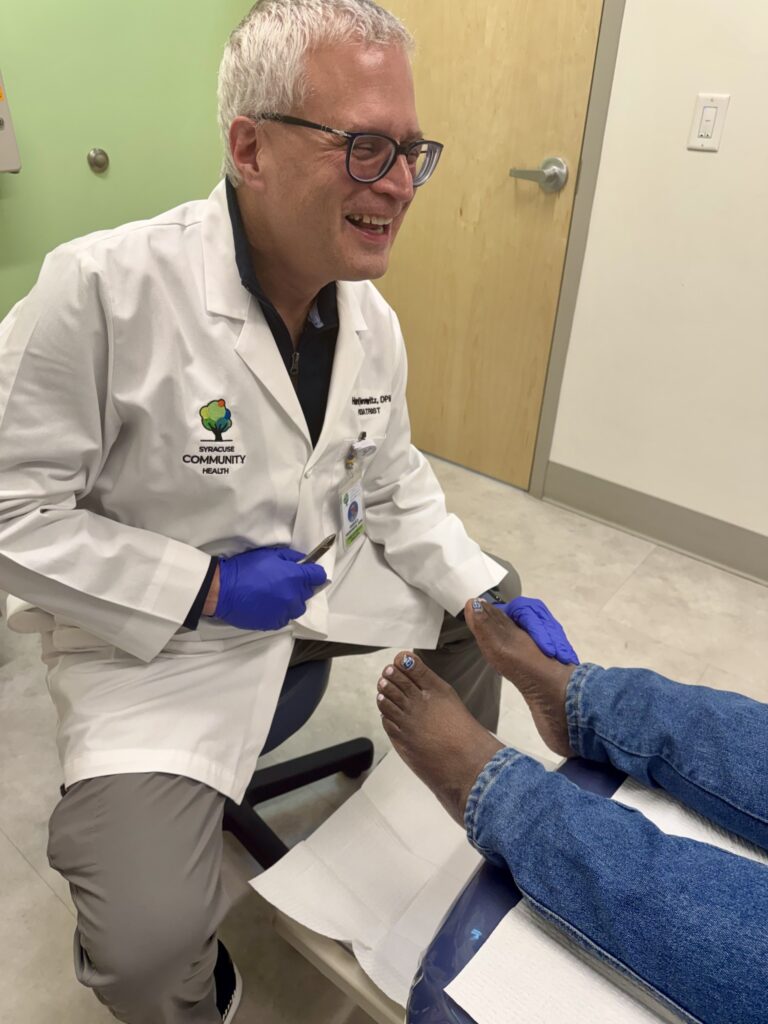
Our podiatrist is here to diagnose, treat, and manage foot, ankle, and leg problems in adults and children. Here, foot and ankle care from our specialists is accessible to everyone.











From diabetic foot care to everyday aches and injuries, our podiatry team keeps you moving comfortably — with expert, compassionate care for patients of all ages.
Diabetic Foot Care. Preventive exams and wound care to protect your health.
Relief From Pain. Treatment for heel pain, bunions, and foot & ankle injuries.
Coordinated Care. Connected to your primary and specialty providers.
Accredited, experienced, and committed to meeting you where you are.
We welcome new patients of all ages.
We accept Medicaid, Medicare, and most insurance.
Income-based discounts as a Federally Qualified Health Center.
Specialized exams and preventive care — Medicare-covered for eligible patients.
Foot and ankle care close to home.
Connected to your primary and specialty care.
Our experienced healthcare professionals work collaboratively to provide comprehensive, patient-centered care tailored to your individual needs.
If you or someone you know is experiencing any of the following, we are here to help.
Walk-In Hours
Monday – Friday
Our experienced healthcare professionals work collaboratively to provide comprehensive, patient-centered care tailored to your individual needs.
Explore expert health tips, community news, and wellness insights from Syracuse Community Health to keep you and your family informed and empowered on your journey to better health.

Yes, Syracuse Community Health accepts Medicaid, Medicare, and most major insurance plans for podiatry services. As a Federally Qualified Health Center (FQHC), we provide foot and ankle care to all patients regardless of insurance status. We also offer a sliding fee discount program based on income for those who qualify.
Syracuse Community Health offers podiatry services at multiple locations throughout Syracuse and Onondaga County for your convenience. Our podiatrists provide foot and ankle care at several of our health centers. Call us at our main number to schedule an appointment at the location nearest you.
Yes, our podiatrists at Syracuse Community Health specialize in diabetic foot care, which is essential for preventing serious complications. We provide regular foot exams, treat wounds and ulcers, manage infections, and help you develop a foot care routine. Diabetic patients should see a podiatrist regularly to maintain healthy feet and prevent amputation risks.
Syracuse Community Health offers affordable podiatry care with a sliding fee discount program for uninsured patients based on household size and income. We believe everyone deserves quality foot and ankle care regardless of ability to pay. Contact our billing department to learn about your options and get an estimate for your specific needs.
Your first podiatry visit at Syracuse Community Health includes a thorough examination of your feet, ankles, and lower legs, along with a review of your medical history. The podiatrist will discuss your symptoms, diagnose any conditions, and create a personalized treatment plan. Wear comfortable clothing that allows easy access to your feet and bring a list of current medications.
Podiatry appointments with Dr. Horowitz are available Monday through Friday, 8:30 AM to 5:15 PM at our Main Location (930 S. Salina St.). Call (315) 476-7921 to schedule your foot care appointment.
Yes, our podiatrists at Syracuse Community Health treat ingrown toenails, fungal toenail infections, and many other common foot problems. We offer in-office procedures for ingrown toenail removal and prescribe effective treatments for fungal infections. These conditions are very treatable, and early care prevents them from becoming more serious or painful.
Yes, Syracuse Community Health podiatrists provide foot and ankle care for both children and adults. We evaluate and treat pediatric conditions including flat feet, ingrown toenails, warts, and growth-related foot pain. Early intervention can prevent long-term problems and help your child stay active and comfortable.
Absolutely. Our podiatrists at Syracuse Community Health specialize in diagnosing and treating heel pain, plantar fasciitis, and heel spurs. Treatment options include stretching exercises, custom orthotics, physical therapy referrals, anti-inflammatory medications, and other proven therapies. Most patients experience significant relief with conservative treatment and avoid the need for surgery.
Our podiatrists at Syracuse Community Health diagnose and treat bunions, hammertoes, and related foot deformities with both conservative and surgical options when appropriate. We start with non-surgical treatments like padding, orthotics, and proper footwear, and can arrange surgical referrals if needed. Our goal is to relieve your pain and restore function with the most appropriate treatment for your situation.
Diabetics should see a podiatrist at least once or twice a year for routine foot examinations, even without symptoms, as diabetes can cause nerve damage and poor circulation that increase infection and amputation risk. Syracuse Community Health’s podiatry team recommends more frequent visits—every 2-3 months—for patients with existing foot complications, neuropathy, or previous ulcers. Our podiatrists work closely with your primary care provider to create a personalized diabetic foot care schedule that protects your health and mobility.
